
Examining the Heart of the Eucharist: A Reflection on Grace and Worthiness
Until recently, I had never come across the idea that one must somehow “make themselves worthy enough to receive the Eucharist, (aka Holy Communion), as Paul taught.” Honestly, I’ve had a hard time reconciling that concept with the heart of the Gospel because it seems like there has to be some kind of misunderstanding here. After spending time in prayer and seeking God’s guidance, I realized the issue wasn’t a contradiction at all! It’s simply a misinterpretation of Paul’s audience and mission.
To reveal the reason for the misunderstanding, I first had to reflect on what it truly means to be a Christian – a follower of Christ. That reflection led me back to the very foundation of His Holy Ordination of the Church, since Christianity is built entirely on Jesus as He is The Way, The Truth, and The Life. And when He ordained the creation and establishment of the Church, He did so in the manner stated in Matthew 16:13, which says:
When Jesus came to the region of Caesarea Philippi, he asked his disciples, “Who do people say that the Son of Man is?” 14 They replied, “Some say John the Baptist; others, Elijah; and still others, Jeremiah or one of the Prophets.” “But you,” he said to them, “who do you say that I am?” Simon Peter replied, “You are the Christ, the Son of the living God.” Then Jesus said to him in reply,
“Blessed are you, Simon son of Jonah. For flesh and blood has not revealed this to you but my heavenly Father. And I say to you: You are Peter, and on this rock, I will build my Church, and the gates of hell will not prevail against it. I will give you the keys of the kingdom of heaven. Whatever you bind on earth shall be bound in heaven, and whatever you loose on earth shall be loosed in heaven.”
Simon, who was renamed “Peter,” spoke the truth, was ordained by Jesus and given unilateral authority to establish the Church as Jesus directed. Jesus then fulfilled God’s promise of redemption, serving as the eternal High Priest in the Order of Melchizedek. He performed the ultimate and eternal Priestly Duty once and for all time, securing salvation for humanity. Being stripped of His priestly garments and crucified, perfect and without sin, Jesus offered Himself as the Sacrificial Lamb of God, taking away the sins of the world. This is the greatest gift, the New Covenant, our Spiritual Passover to eternal life, commemorated through the Holy Eucharist, and it is complete. There is nothing more we need to do except believe it and receive it.
Jesus offered Himself freely out of love to lay down His life to redeem humanity from the bondage of sin and death, reconciling God with man. This monumental feat corrects the error from the beginning and for all time and it is finished – that is the Old Covenant is completed in the New Eternal Covenant! As Believers, we gladly commemorate and accept His most gracious gift for our Salvation.
Remember when Adam and Eve’s attempt to make clothing of fig leaves was insufficient to cover their nakedness revealed by their sin and God made clothes out of animal skin to cover them completely? So too, the Body and Blood of Christ given up for us covers the sins of Believers completely, once for all time. It is impossible for us to prove ourselves “worthy” enough to receive the Eucharist. He gave His Body and Blood sacrifice to redeem sinners—not the sinless, which none of us are. Salvation is a gift. We didn’t earn it, and we never could. It’s the active power of grace, freely given, and faith, fully believing through a sustained personal relationship with God, through our Lord and Savior, and Priest forever, Jesus Christ.
Because our personal relationship with God is made possible through Jesus’ sacrifice, it’s important to carefully discern how we receive the Eucharist today. Given the distinctions between Jesus’ and Paul’s teachings, it is essential to examine both perspectives with precision and exactness. This ensures that we approach God’s most sacred gift with the reverence and devotion it deserves, bringing comfort in the knowledge that we remember Him in the most faithful way.
From Jesus’ perspective, on the one hand, we recognize that the Eucharist is all about commemorating Him, His sacrifice for our salvation, His infinite love because He did so, His invitation to eternal life so that where He is, we may be also. To suggest that we must somehow “qualify” or meet Him halfway before receiving the Eucharist seemingly runs counter to the very nature of the Gospel. We simply can’t meet Him halfway. Grace doesn’t require negotiation. It’s offered freely, completely, and received undeservedly by faith.
On the other hand, some people believe that Paul’s teachings are clear, that we must attain a certain level of worthiness before we can receive the Eucharist. This gives me pause, prompting me to look back over more than two thousand twenty-five years of history, back to the moment when Jesus Himself, the real and tangible presence of our Lord, established the New Covenant. With deliberate intention and clarity, He revealed exactly what the New Covenant represents. Because at the heart of the Gospel, I know it is His righteousness, not ours, that provides The Way to eternal life.
However, there had to be some reason for their thinking because if we start placing conditions on the free gift of Salvation, we risk turning grace into a transaction. And that can dangerously distort our understanding of the free will Blood of the Cross. But that’s not what is happening here. I believe those who follow Paul’s teaching on the Eucharist, including the Catholic Church, are simply misunderstanding the context of Paul’s audience and mission when it comes to the sacrament. To clear up this confusion, we need to look back at the very first instance of the Eucharist, the institution of the New Eternal Covenant.
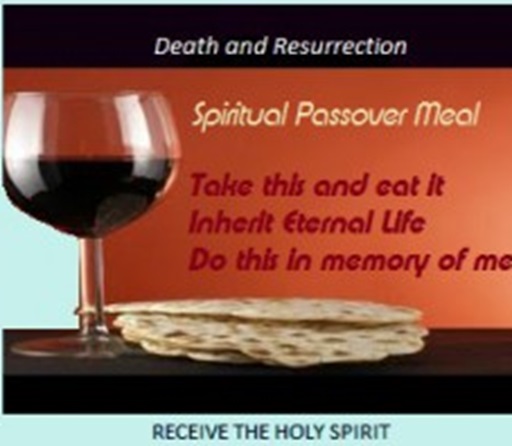
At the Last Supper, Jesus gave His Disciples clear, direct instructions when He established the New Covenant, our Spiritual Passover, saying, “Do this in remembrance of Me.” And He went even further by saying, ‘As often as you take it, do so in memory of Me.’ Without a doubt, the Apostle Peter implemented Jesus’ teaching on the Holy Eucharist as he established the early Church. However, after Jesus’ crucifixion, death, resurrection, and ascension, Believers had to meet in secret, hiding in private places to worship, out of fear of persecution—or even worse, death. Despite the danger in sharing the gospel, they still remembered Jesus’ ultimate gift, partaking the Eucharist at each gathering prefacing it with prayer and giving thanks, just as Jesus had instructed.
Meanwhile, Paul (a Pharisee known as Saul of Tarsis before his conversion) was a man of authority, actively persecuting the early followers of Christ. He was one of the key figures behind their suffering—that is until his life was completely transformed on the road to Damascus. Imagine Saul, relentlessly pursuing Christians, suddenly being stopped in his tracks by a blinding light, encountering the very Glory of the Lord in an instant!
God often chooses the least person expected to do great things for Him, like Moses, once a Prince of Egypt, was chosen to deliver the Hebrews from the bondage of slavery, serve as the presenter of God’s laws, and write the first five books of the Bible. And David, a humble shepherd boy, the youngest of the sons of Jesse, of the Tribe of Judah, often overlooked and hidden in the hills, would be anointed and become the greatest King of Israel. His military prowess went way beyond the slaying of Goliath. And with a heart likened to God’s own, David was often summoned to play his harp, using his exceptional musical talents to bring peace to the troubled soul of Israel’s first king. Today, we are spiritually edified by his profound poetry that transcends time and is beautifully delivered in his sacred writing of the Psalms.
Paul’s testimony too is truly powerful, as he experienced firsthand what it meant to become an instant Christian convert by faith—believing without seeing. He was literally blinded by the Glory of the Lord during his encounter, where Jesus identified Himself. In his blindness, Paul fasted, repented, and reflected deeply on the realization that in persecuting Christians, he had actually been persecuting Jesus. This revelation had a profound impact on him, shaping the very experience he would later use to bring the Good News of the Gospel to the Gentiles.
Three days later, Paul’s sight was miraculously restored by the prophet Ananias, whom God had sent with the message that Paul would be a key instrument in spreading the Good News. This dramatic transformation, fueled by his personal encounter with Jesus and his time of fasting, repentance and reflection, was exactly what Paul needed.
Paul was not present at the Last Supper where the Apostles (Believers) were taught by Jesus about the administration of the Eucharist. But through his own experience, Paul was inspired to teach the gentiles that they needed to repent of their sins and reflect on what it meant to be a Christian, having attained adequate knowledge, before receiving the Eucharist, guiding the early gentile converts from paganism to Christianity. Paul’s radical change became a powerful testimony of God’s Grace and Glory, shaping the way he reached out to the Gentile world with the message of Salvation.
Paul dedicated his life to proclaiming the Gospel. His full encounter, as described in Acts, resulted in Paul’s conversion from persecutor of Christians to Apostle of Christ. Since he converted former pagan worshipers to Christianity, Paul knew his polytheistic audience needed to understand what it took to become a follower of Christ that they had to give up the former sinful things and embrace through faith the Good News of the Gospel. This involved a personal renewal of their heart and mind to align with the teachings of Christ.
To accomplish this, they needed to examine themselves inwardly and repent of their sins to understand the magnitude of Jesus’ sacrifice. Jesus offered Himself as the Sacrificial Lamb of God who takes away the sins of the world. This foundational knowledge was essential before they could partake in their first Eucharist— their First Communion, so to speak.
The kind of mission that Paul had demanded deep introspection and responsibility even for himself given his former persecution of early followers of Christ. Paul had to be overjoyed when he witnessed the evidence of faith with the restoration of his sight and he laid his heart bare revealing his personal experience with fasting, confession and repentance. His personal context mattered as Paul was Divinely chosen to convert pagans to Christianity, those who had no prior knowledge of the law or the prophets and to write most of the New Testament!
Jesus first introduced the Eucharist to His followers (Believers), and then Paul brought it to the Gentiles (pagan Gentiles, non-believers). In this sense, the Eucharist was offered first to the Jews, and then to the Gentiles. For us, as Christian Believers today, it’s Jesus—not Paul—who is the ultimate authority on the Eucharist. Jesus’ sacrificial gift for our redemption is the very heart of Christianity. Naturally, He is the authority on the matter, and there is no other way to look at it. Jesus invites every Believer to His Communion table, welcoming those who accept His righteousness as the full atonement for their sins, for He alone is blameless.
When receiving the Eucharist knowing that it represents Jesus’ Body and Blood sacrifice freely given for our Salvation, a person need only pray (perhaps the Lord’s Prayer) and give thanks and freely and gladly receive His sacred gift in His memory, as He said and because we love Him. It is dangerous to do otherwise as we don’t know if we will even be here from one moment to the next.
The Church must return to Jesus’ Authority on the Eucharist, because we are Believers and followers of Christ, not Gentile pagan worshippers learning about Jesus for the first time as was Paul’s mission to teach. And this should be the guiding principle because as Believers, we understand the fulfillment of both the law and the prophets promised from the beginning. With reverent hearts, we understand and humbly embrace the New Covenant as our Spiritual Passover to Eternal Life, made possible through the sacred Priestly Offering of Jesus’ Body and Blood sacrifice, poured out for our Salvation. But this was not so for first time gentile converts. And this is where the misunderstanding rests.
While Paul was deeply transformed by his encounter with Jesus, his audience consisted of pagans who needed to understand the significance of the Eucharist because they had no prior knowledge of the law or the prophets. Paul’s teachings emphasized the importance of confession and repentance before partaking of the Eucharist, encouraging them to approach it “worthily” as they received it for the first time. However, it is Jesus—whose sacrifice is the foundation of our faith—who remains the ultimate Authority on the sacrament.
Although many early Believers were blessed to be eyewitnesses to Jesus’ testimony, they also faced unique challenges in keeping the faith so to speak and partaking of the Eucharist was no doubt part of it. And Paul who wasn’t present at the Last Supper, had to be spiritually prepared for the significant role he would play in the conversion of pagans to Christianity and writing much of the New Testament. Still, it’s important to remember that Jesus, not Paul, is the Authority on the Eucharist, and it is His teachings we must follow, as they were given directly by our Lord who is the Head of the Church. When Jesus returns, let Him find the Church, the Collective Body of Believers, partaking of the Eucharist, as He instructed.
Pope Leo has a valuable opportunity here to set the record straight on the Authority of the Eucharist. For the Collective Body of Believers, the Church, let’s not add to what Jesus already instituted as the New Covenant. Let us receive the Eucharist with prayer and with grateful thankful hearts, asking God to forgive our sins as we forgive those who sin against us. Let us not hold back from receiving the Eucharist out of fear of unworthiness but let us come forward to receive it in awe and love for the One who has made us worthy through His Body and Blood Sacrifice, His Righteousness and Grace (2 Corinthians 12:9).
As John 3:16 reminds us:
“For God so loved the world that He gave His only Son, that whoever believes in Him should not perish but have eternal life.”


 Divine Encounters Are Spiritual Treasures To Be Shared
Leave a comment